Domain tennis-usingen.de kaufen?
Wir ziehen mit dem Projekt
tennis-usingen.de um.
Sind Sie am Kauf der Domain
tennis-usingen.de interessiert?
domain@kv-gmbh.de · 0541-91531010
Domain tennis-usingen.de kaufen?
Ist Simple Present und Present Simple dasselbe?
Ja, Simple Present und Present Simple sind dasselbe. Es handelt sich um die Zeitform in der englischen Grammatik, die verwendet wird, um über allgemeine Fakten, Gewohnheiten oder regelmäßige Handlungen in der Gegenwart zu sprechen. **
Sind Present Continuous und Present Progressive dasselbe?
Ja, Present Continuous und Present Progressive sind dasselbe und werden oft synonym verwendet. Beide beziehen sich auf eine Handlung, die gerade in diesem Moment stattfindet. **


Ähnliche Suchbegriffe für Forgetting-The-Present
Top-Angebote
Produkte zum Begriff Forgetting-The-Present:
-
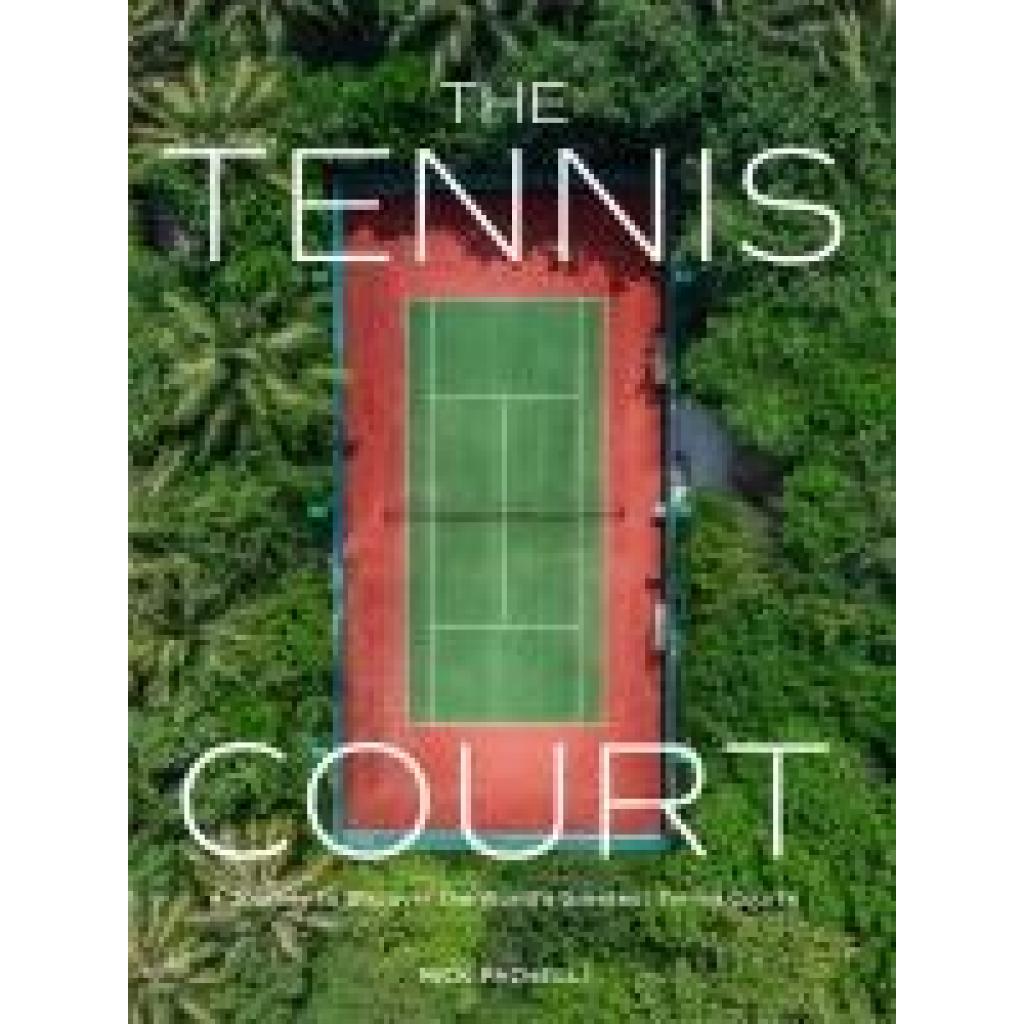
Pachelli, Nick: The Tennis CourtThe Tennis Court , Every one of the world's half a million tennis courts is, at its most basic, an identical blank canvas: a 78-foot by 36-foot rectangle, divided by a 3-foot-high net in its centre, and marked with eleven straight lines. But add in the elements of surface, space, wind, acoustics, crowds, shadows, humidity, and even air density, and every tennis court is unique-a work of art. And some are masterpieces. Nick Pachelli curates and profiles 200 of the world's most beautiful, iconic, significant, alluring, and idiosyncratic tennis courts from across the globe, each breathtakingly photographed. He explores the heavyweights, including Wimbledon's All England Lawn Tennis Club, which employs a hawk to keep stray birds from soiling the meticulous lawns. Arthur Ashe, the Grandstand, and Court 17 in Flushing, Queens, where hundreds of thousands of tennis fans gather every summer for the US Open. And there's Court Philippe-Chatrier at Roland-Garros, whose clay seems to take on a different shade-burnt orange, burnt red, burgundy, umber-every time you see it. We visit far-flung treasures, such as Waiheke Tennis Club in New Zealand, where you'll need to take a plane, then a ferry, then a car or bus, and then walk before arriving there. Indoor marvels, including the Tennis Club de Belgique, which evokes the hushed, reverent feeling of a theatre, with skylights illuminating the court and leaving the spectators in the shadows. Hidden jewels, such as the tiny Tennis Club San Stin in Venice, a secret, single outdoor clay court tucked away behind a villa and a 15-foot wall shrouded with vines. There are urban courts, including the Knickerbocker Field Club, deep in the heart of Flatbush, Brooklyn. Academies, like Rafael Nadal's tennis temple in Mallorca, Spain. And the extreme: a single court completely isolated in the wilds of Scotland; a court in northern Spain revealed when the tide goes out, the sand hardens, and the metallic plates that serve as lines re-emerge; and a court in Kenya made out of termite mounds. Throughout, Pachelli not only conducts a masterful, once-in-a-lifetime tour of the world's best courts, but in his writing does something equally immersive: He captures the real passion-some might say obsession-that tennis inspires. Because it's on the court, no matter how grandiose or mundane, whether in an exotic locale or around the corner, where tennis players truly see themselves. Where we come face-to-face with our temperament, our drive, our frustration, our bliss, our longing. "This book made me fall in love with tennis all over again." - Rennae Stubbs, former world No. 1 and six-time Grand Slam champion "How had I been so blind? I'd seen a tennis court as an arrangement of lines, neat boxes, a net. This book reveals so much more: spaces within spaces, quirks and surfaces, shadows and light, and the communities most of all. What a gift. I won't look at the game the same way again." - Louisa Thomas, staff writer, The New Yorker "A pure pleasure to read and peruse." - Christopher Clarey, New York Times bestselling author "From Kent to Kenya, Marrakech to Melbourne. Indoors, outdoors. Seaside and underground. Pachelli captures the magic in this masterful book, which celebrates not just tennis, but this topspinning orb we call planet Earth." - Jon Wertheim, New York Times bestselling author and correspondent for 60 Minutes "I've been around tennis all over the world, and this book truly speaks to the beauty and importance of tennis courts, whether at tennis academies or remote public courts. Every tennis player and fan will enjoy this book." - Patrick Mouratoglou, world-renowned tennis coach and founder of Mouratoglou Academy "This book contains hundreds of beautifully photographed tennis courts. The real joy, though, is found in the stories that unfold about each one." - Katrina M. Adams, author and former president of the USTA "Detailing the remote and far-removed to the legendary courts that have hosted the most storied events in tennis history, this gorgeous book lends us a lens to encounter the world." - Caitlin Thompson, founder of Racquet magazine "Can't travel right now? No worries; Nick Pachelli has got you covered. My recommendation: Open the book to a random page and start dreaming away. And who knows? One day you may find yourself exactly there. A truly dreamy book!" - Andrea Petkovic, former top-10 professional tennis player, host, and writer "A stunning celebration of tennis that speaks to the heart of anyone with a passion for a pastime."- Tom Coyne, New York Times bestselling author , > , Erscheinungsjahr: 20240827, Produktform: Leinen, Autoren: Pachelli, Nick, Seitenzahl/Blattzahl: 335, Themenüberschrift: SPORTS & RECREATION / Racket Sports / Tennis, Keyword: tennis court book;us open;gifts for men;coffee table book;tennis photography;french open;grand slams;tennis fashion;tennis style;travel photography;tennis europe, Fachschema: Englische Bücher / Sachbuch / Sport~Fotobände (allgemein)~Geschenkband / Fotobände~Fotografie / Dokumentarfotografie, Geschichte~Tennis~Sport / Lexikon, Handbuch, Jahrbuch, Fachkategorie: Fotografie: Sammlungen~Fotojournalismus~Sport, allgemein~Reiseführer: Aktiv-Urlaub, Imprint-Titels: Artisan, Warengruppe: HC/Ballsport, Fachkategorie: Tennis, UNSPSC: 49019900, Warenverzeichnis für die Außenhandelsstatistik: 49019900, Verlag: Workman Publishing, Verlag: Workman Publishing, verfügbar ab: 20240912, Länge: 290, Breite: 211, Höhe: 30, Gewicht: 1485, Produktform: Gebunden, Genre: Importe, Genre: Importe,31,12 €*Versand: 0,00 €Sichere Weiterleitung zum Anbieter



-
Ist Simple Present dasselbe wie Simple Present?
Ja, "Simple Present" und "Present Simple" bezeichnen dieselbe Zeitform in der englischen Grammatik. Es wird verwendet, um über regelmäßige Handlungen, Gewohnheiten, Fakten oder allgemeine Wahrheiten zu sprechen, die in der Gegenwart stattfinden. **
-
Ist Present Progressive und Present Continuous das gleiche?
Ist Present Progressive und Present Continuous das gleiche? Ja, beide Begriffe beziehen sich auf die gleiche Zeitform im Englischen, nämlich die Gegenwart. Der Present Progressive wird häufiger in den USA verwendet, während der Present Continuous in Großbritannien gebräuchlicher ist. Beide Formen werden verwendet, um über Handlungen zu sprechen, die gerade in diesem Moment stattfinden oder um zukünftige Handlungen auszudrücken, die bereits geplant sind. In der Grammatik werden beide Begriffe oft synonym verwendet, obwohl einige Lehrbücher möglicherweise einen Unterschied zwischen den beiden machen. **
-
Ist present tense das gleiche wie Simple Present?
Ist present tense das gleiche wie Simple Present? Present tense ist eine grammatische Kategorie, die alle Zeitformen umfasst, die sich auf die Gegenwart beziehen. Simple Present ist eine spezifische Zeitform innerhalb des present tense, die verwendet wird, um regelmäßige Handlungen, Gewohnheiten oder allgemeine Fakten auszudrücken. Es gibt auch andere Formen des present tense, wie zum Beispiel Present Continuous oder Present Perfect, die sich auf verschiedene Arten von Handlungen in der Gegenwart beziehen. Daher ist Simple Present nur eine von mehreren Möglichkeiten, die Gegenwart in der englischen Sprache auszudrücken. **
-
Simple present oder present progressive in dem Satz?
Um die korrekte Zeitform zu bestimmen, müsste der Satz genauer betrachtet werden. Im Allgemeinen wird das Simple Present verwendet, um allgemeine Fakten, Gewohnheiten oder wiederkehrende Handlungen auszudrücken. Das Present Progressive hingegen wird für Handlungen verwendet, die gerade in diesem Moment stattfinden. **


Kann mir jemand helfen, Present Progressive oder Simple Present?
Das Present Progressive wird verwendet, um über Handlungen zu sprechen, die gerade im Moment stattfinden oder in der Zukunft geplant sind. Das Simple Present wird verwendet, um über allgemeine Fakten, Gewohnheiten oder regelmäßige Handlungen zu sprechen. Es hängt also von der spezifischen Situation ab, welche Zeitform verwendet werden sollte. **
Wann verwendet man Present Simple und wann Present Continuous?
Wann verwendet man Present Simple und wann Present Continuous? Der Present Simple wird verwendet, um regelmäßige Handlungen, Gewohnheiten, allgemeine Wahrheiten oder Fakten auszudrücken. Zum Beispiel: "She works in a bank." Der Present Continuous hingegen wird verwendet, um über Handlungen zu sprechen, die gerade in diesem Moment stattfinden oder um zukünftige Pläne auszudrücken. Zum Beispiel: "She is working on a project." Es ist wichtig, zwischen den beiden Zeitformen zu unterscheiden, um die genaue Bedeutung einer Aussage zu vermitteln. **
Top-Angebote
Produkte zum Begriff Forgetting-The-Present:
-
Pachelli, Nick: The Tennis CourtThe Tennis Court , Every one of the world's half a million tennis courts is, at its most basic, an identical blank canvas: a 78-foot by 36-foot rectangle, divided by a 3-foot-high net in its centre, and marked with eleven straight lines. But add in the elements of surface, space, wind, acoustics, crowds, shadows, humidity, and even air density, and every tennis court is unique-a work of art. And some are masterpieces. Nick Pachelli curates and profiles 200 of the world's most beautiful, iconic, significant, alluring, and idiosyncratic tennis courts from across the globe, each breathtakingly photographed. He explores the heavyweights, including Wimbledon's All England Lawn Tennis Club, which employs a hawk to keep stray birds from soiling the meticulous lawns. Arthur Ashe, the Grandstand, and Court 17 in Flushing, Queens, where hundreds of thousands of tennis fans gather every summer for the US Open. And there's Court Philippe-Chatrier at Roland-Garros, whose clay seems to take on a different shade-burnt orange, burnt red, burgundy, umber-every time you see it. We visit far-flung treasures, such as Waiheke Tennis Club in New Zealand, where you'll need to take a plane, then a ferry, then a car or bus, and then walk before arriving there. Indoor marvels, including the Tennis Club de Belgique, which evokes the hushed, reverent feeling of a theatre, with skylights illuminating the court and leaving the spectators in the shadows. Hidden jewels, such as the tiny Tennis Club San Stin in Venice, a secret, single outdoor clay court tucked away behind a villa and a 15-foot wall shrouded with vines. There are urban courts, including the Knickerbocker Field Club, deep in the heart of Flatbush, Brooklyn. Academies, like Rafael Nadal's tennis temple in Mallorca, Spain. And the extreme: a single court completely isolated in the wilds of Scotland; a court in northern Spain revealed when the tide goes out, the sand hardens, and the metallic plates that serve as lines re-emerge; and a court in Kenya made out of termite mounds. Throughout, Pachelli not only conducts a masterful, once-in-a-lifetime tour of the world's best courts, but in his writing does something equally immersive: He captures the real passion-some might say obsession-that tennis inspires. Because it's on the court, no matter how grandiose or mundane, whether in an exotic locale or around the corner, where tennis players truly see themselves. Where we come face-to-face with our temperament, our drive, our frustration, our bliss, our longing. "This book made me fall in love with tennis all over again." - Rennae Stubbs, former world No. 1 and six-time Grand Slam champion "How had I been so blind? I'd seen a tennis court as an arrangement of lines, neat boxes, a net. This book reveals so much more: spaces within spaces, quirks and surfaces, shadows and light, and the communities most of all. What a gift. I won't look at the game the same way again." - Louisa Thomas, staff writer, The New Yorker "A pure pleasure to read and peruse." - Christopher Clarey, New York Times bestselling author "From Kent to Kenya, Marrakech to Melbourne. Indoors, outdoors. Seaside and underground. Pachelli captures the magic in this masterful book, which celebrates not just tennis, but this topspinning orb we call planet Earth." - Jon Wertheim, New York Times bestselling author and correspondent for 60 Minutes "I've been around tennis all over the world, and this book truly speaks to the beauty and importance of tennis courts, whether at tennis academies or remote public courts. Every tennis player and fan will enjoy this book." - Patrick Mouratoglou, world-renowned tennis coach and founder of Mouratoglou Academy "This book contains hundreds of beautifully photographed tennis courts. The real joy, though, is found in the stories that unfold about each one." - Katrina M. Adams, author and former president of the USTA "Detailing the remote and far-removed to the legendary courts that have hosted the most storied events in tennis history, this gorgeous book lends us a lens to encounter the world." - Caitlin Thompson, founder of Racquet magazine "Can't travel right now? No worries; Nick Pachelli has got you covered. My recommendation: Open the book to a random page and start dreaming away. And who knows? One day you may find yourself exactly there. A truly dreamy book!" - Andrea Petkovic, former top-10 professional tennis player, host, and writer "A stunning celebration of tennis that speaks to the heart of anyone with a passion for a pastime."- Tom Coyne, New York Times bestselling author , > , Erscheinungsjahr: 20240827, Produktform: Leinen, Autoren: Pachelli, Nick, Seitenzahl/Blattzahl: 335, Themenüberschrift: SPORTS & RECREATION / Racket Sports / Tennis, Keyword: tennis court book;us open;gifts for men;coffee table book;tennis photography;french open;grand slams;tennis fashion;tennis style;travel photography;tennis europe, Fachschema: Englische Bücher / Sachbuch / Sport~Fotobände (allgemein)~Geschenkband / Fotobände~Fotografie / Dokumentarfotografie, Geschichte~Tennis~Sport / Lexikon, Handbuch, Jahrbuch, Fachkategorie: Fotografie: Sammlungen~Fotojournalismus~Sport, allgemein~Reiseführer: Aktiv-Urlaub, Imprint-Titels: Artisan, Warengruppe: HC/Ballsport, Fachkategorie: Tennis, UNSPSC: 49019900, Warenverzeichnis für die Außenhandelsstatistik: 49019900, Verlag: Workman Publishing, Verlag: Workman Publishing, verfügbar ab: 20240912, Länge: 290, Breite: 211, Höhe: 30, Gewicht: 1485, Produktform: Gebunden, Genre: Importe, Genre: Importe,31,12 €*Versand: 0,00 €Sichere Weiterleitung zum Anbieter
-
Ist Simple Present und Present Simple dasselbe?
Ja, Simple Present und Present Simple sind dasselbe. Es handelt sich um die Zeitform in der englischen Grammatik, die verwendet wird, um über allgemeine Fakten, Gewohnheiten oder regelmäßige Handlungen in der Gegenwart zu sprechen. **
-
Sind Present Continuous und Present Progressive dasselbe?
Ja, Present Continuous und Present Progressive sind dasselbe und werden oft synonym verwendet. Beide beziehen sich auf eine Handlung, die gerade in diesem Moment stattfindet. **
-
Ist Simple Present dasselbe wie Simple Present?
Ja, "Simple Present" und "Present Simple" bezeichnen dieselbe Zeitform in der englischen Grammatik. Es wird verwendet, um über regelmäßige Handlungen, Gewohnheiten, Fakten oder allgemeine Wahrheiten zu sprechen, die in der Gegenwart stattfinden. **
-
Ist Present Progressive und Present Continuous das gleiche?
Ist Present Progressive und Present Continuous das gleiche? Ja, beide Begriffe beziehen sich auf die gleiche Zeitform im Englischen, nämlich die Gegenwart. Der Present Progressive wird häufiger in den USA verwendet, während der Present Continuous in Großbritannien gebräuchlicher ist. Beide Formen werden verwendet, um über Handlungen zu sprechen, die gerade in diesem Moment stattfinden oder um zukünftige Handlungen auszudrücken, die bereits geplant sind. In der Grammatik werden beide Begriffe oft synonym verwendet, obwohl einige Lehrbücher möglicherweise einen Unterschied zwischen den beiden machen. **
Ähnliche Suchbegriffe für Forgetting-The-Present
-
Ist present tense das gleiche wie Simple Present?
Ist present tense das gleiche wie Simple Present? Present tense ist eine grammatische Kategorie, die alle Zeitformen umfasst, die sich auf die Gegenwart beziehen. Simple Present ist eine spezifische Zeitform innerhalb des present tense, die verwendet wird, um regelmäßige Handlungen, Gewohnheiten oder allgemeine Fakten auszudrücken. Es gibt auch andere Formen des present tense, wie zum Beispiel Present Continuous oder Present Perfect, die sich auf verschiedene Arten von Handlungen in der Gegenwart beziehen. Daher ist Simple Present nur eine von mehreren Möglichkeiten, die Gegenwart in der englischen Sprache auszudrücken. **
-
Simple present oder present progressive in dem Satz?
Um die korrekte Zeitform zu bestimmen, müsste der Satz genauer betrachtet werden. Im Allgemeinen wird das Simple Present verwendet, um allgemeine Fakten, Gewohnheiten oder wiederkehrende Handlungen auszudrücken. Das Present Progressive hingegen wird für Handlungen verwendet, die gerade in diesem Moment stattfinden. **
-
Kann mir jemand helfen, Present Progressive oder Simple Present?
Das Present Progressive wird verwendet, um über Handlungen zu sprechen, die gerade im Moment stattfinden oder in der Zukunft geplant sind. Das Simple Present wird verwendet, um über allgemeine Fakten, Gewohnheiten oder regelmäßige Handlungen zu sprechen. Es hängt also von der spezifischen Situation ab, welche Zeitform verwendet werden sollte. **
-
Wann verwendet man Present Simple und wann Present Continuous?
Wann verwendet man Present Simple und wann Present Continuous? Der Present Simple wird verwendet, um regelmäßige Handlungen, Gewohnheiten, allgemeine Wahrheiten oder Fakten auszudrücken. Zum Beispiel: "She works in a bank." Der Present Continuous hingegen wird verwendet, um über Handlungen zu sprechen, die gerade in diesem Moment stattfinden oder um zukünftige Pläne auszudrücken. Zum Beispiel: "She is working on a project." Es ist wichtig, zwischen den beiden Zeitformen zu unterscheiden, um die genaue Bedeutung einer Aussage zu vermitteln. **
* Alle Preise verstehen sich inklusive der gesetzlichen Mehrwertsteuer und ggf. zuzüglich Versandkosten. Die Angebotsinformationen basieren auf den Angaben des jeweiligen Shops und werden über automatisierte Prozesse aktualisiert. Eine Aktualisierung in Echtzeit findet nicht statt, so dass es im Einzelfall zu Abweichungen kommen kann. ** Hinweis: Teile dieses Inhalts wurden von KI erstellt.